
I’ve seen too many backyards that could be beautiful just sitting there, ignored.
You want that lush outdoor space but the whole thing feels like too much work. Or maybe you just don’t know where to start.
Here’s the truth: creating a backyard you actually enjoy doesn’t require a degree in horticulture. It just needs the right approach.
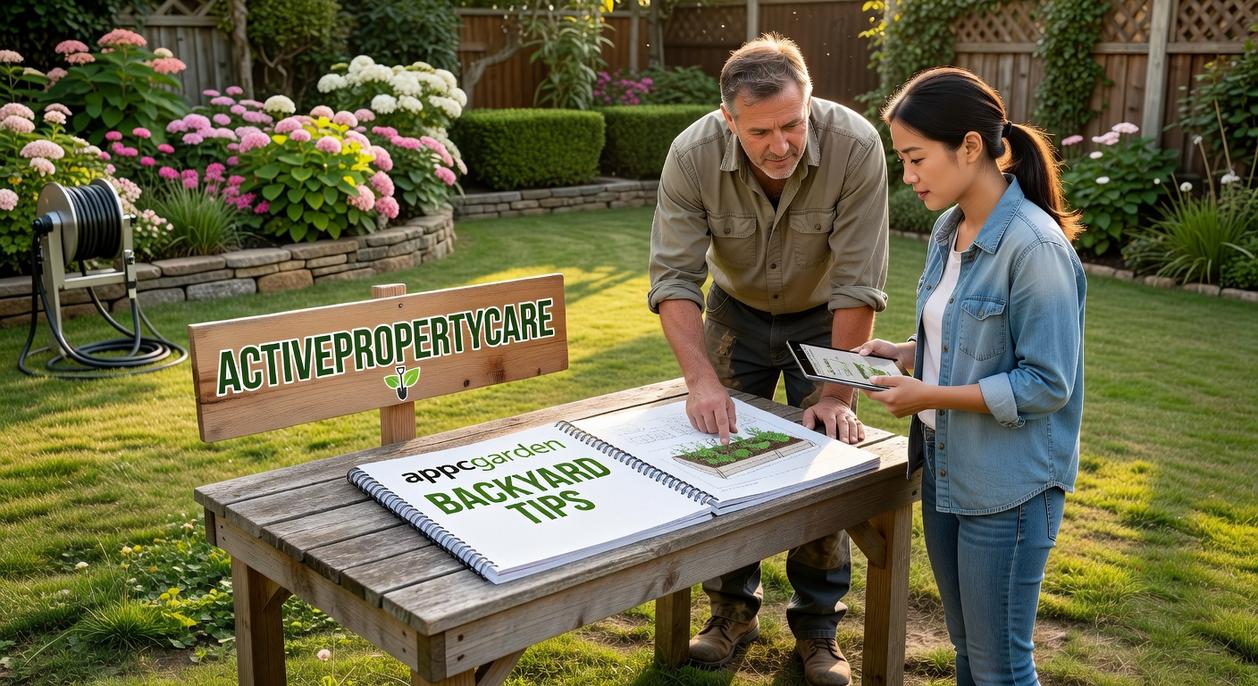
I’m going to walk you through appcgarden backyard tips from activepropertycare that work. Not theory. Real steps that turn struggling yards into spaces you want to spend time in.
This guide covers everything from getting your soil right to keeping things looking good through every season. We’re using proven methods that deliver results whether you’re planting your first flower bed or you’ve been gardening for years.
You’ll learn how to break this down into manageable steps. No overwhelm. Just clear direction on what to do and when to do it.
By the end, you’ll have a roadmap that makes sense for your yard and your schedule.
The Foundation: Building Healthy Soil for Stronger Plants
You know what drives me crazy?
People spend hundreds on plants and wonder why everything dies by July.
They blame the weather. They blame pests. They blame themselves for having a black thumb.
But here’s what nobody tells you. Your soil is probably garbage.
I mean it. Most yards have soil that’s either hard as concrete or drains like a sieve. And we just keep planting in it, expecting different results.
Healthy soil isn’t optional. It’s the whole game. Your plants literally eat from it, drink from it, and anchor themselves in it. Everything else is just window dressing.
So let’s fix it.
Start with a jar test. Fill a clear jar halfway with soil from your garden. Add water until it’s almost full, shake it hard, then let it sit for 24 hours. The soil will separate into layers: sand at the bottom, silt in the middle, clay on top. This shows you what you’re working with (and why your drainage might suck).
Next, grab a pH test kit from any garden center. They’re cheap. Most plants want soil between 6.0 and 7.0. If you’re way off, you’ll know why nothing grows.
Now here’s where it gets good.
Compost changes everything. It breaks up clay soil so water can move through. It helps sandy soil hold moisture and nutrients. It feeds the microbes that feed your plants. According to appcgarden backyard tips from activepropertycare, adding organic matter is the single best thing you can do for any garden bed.
Mix up this simple amendment: combine equal parts compost, peat moss, and perlite. Work it into your top 6 inches of soil before planting. Your plants will actually have something to work with.
Smart Plant Selection and Placement
You can’t just stick any plant anywhere and hope it works out.
I learned this the hard way when I planted sun-loving roses in a shaded corner of my yard. They barely survived the season.
The truth is, most garden failures come down to one thing. Putting the wrong plant in the wrong spot.
Some gardeners say you should experiment and see what happens. They argue that breaking the rules is how you discover what works in your unique space. And sure, sometimes you get lucky.
But here’s what I’ve found after years of trial and error.
You save time and money when you match plants to their ideal conditions from the start. Check your climate zone. Look at how much sun that spot actually gets (not how much you think it gets). Test your soil type.
The plant tag tells you everything you need to know. Read it.
Spacing matters more than you think. I see crowded gardens all the time where plants are fighting for light and air. That’s when disease shows up. Give each plant room to grow to its full size, even if your garden looks sparse at first.
Here’s how I create depth in my beds. Tall plants go in the back. Medium height in the middle. Short ones up front. Then I mix different leaf textures and colors so nothing looks flat or boring.
Want to make your life easier? Go native.
Native plants already know how to survive in your area. They need less water once established. They don’t require constant babying. The local pollinators love them too.
I use appcgarden to track which plants thrive in different spots around my yard. It keeps me from repeating the same mistakes.
Start with the right plant in the right place. Everything else gets easier from there.
Essential Maintenance: Watering, Weeding, and Mulching
Here’s what most people get wrong about garden maintenance.
They water every day for five minutes and wonder why their plants look stressed by July.
I’m going to be straight with you. That daily sprinkle? It’s actually hurting your garden more than helping it.
Your plants need deep watering. Not frequent watering.
Water thoroughly once or twice a week instead of a little bit every day. This forces roots to grow down into the soil where they can access moisture during dry spells. Shallow watering creates shallow roots, and shallow roots mean weak plants that can’t handle heat.
Do it early in the morning. Between 5 and 9 AM is your sweet spot. The air is cool so less water evaporates, and your plants have all day to dry off (which helps prevent disease).
Now let’s talk about weeds.
Some gardeners say you should wait until you see weeds before you worry about them. But that’s backwards thinking. By the time you see them, they’re already stealing nutrients from your plants.
Pull weeds when they’re small. Check your beds every few days and yank anything that doesn’t belong. It takes two minutes now instead of two hours later.
Which brings me to mulch.
A 2 to 3 inch layer of mulch does three things at once. It blocks weed seeds from germinating, keeps moisture in the soil, and stops temperature swings that stress plant roots.
For most backyard situations, I recommend shredded hardwood. It breaks down slowly and looks clean. Pine bark works well around acid-loving plants like azaleas. Cedar costs more but lasts longer and smells great.
Just don’t pile it against plant stems. Leave a small gap or you’ll invite rot.
The appcgarden backyard guide by activepropertycare covers these basics in more detail if you want to go deeper.
Bottom line? Water deep, weed early, and mulch right. That’s how you keep a garden healthy without spending every weekend fighting problems.
Nurturing Your Garden: Feeding and Pruning for Success
Your plants need food.
I know that sounds obvious, but most people treat fertilizing like some mysterious science project. It’s not.
Let me break down what those three letters on every fertilizer bag actually mean.
N-P-K stands for Nitrogen, Phosphorus, and Potassium. Think of nitrogen as the leafy green maker. It pushes your plants to grow stems and foliage. Phosphorus? That’s your root builder and flower booster. Potassium keeps everything strong and helps plants fight off disease.
When you see numbers like 10-10-10 on a bag, that’s the percentage of each element.
Here’s what confuses people though. They think more is always better. It’s not. Too much nitrogen gives you a giant leafy plant with zero flowers (which is great for lettuce, terrible for tomatoes).
When should you actually feed your plants?
Spring is your main feeding window. Right when new growth starts popping up, that’s when plants are hungry. Most gardens do fine with one good feeding in early spring and maybe another in midsummer.
You’ve got two main options. Granular slow-release fertilizers sit in the soil and break down over weeks. Liquid fertilizers work faster but you need to apply them more often. I use granular for most things because I’m lazy and it works.
Now let’s talk about cutting things back.
Pruning freaks people out. They’re scared they’ll kill their plants. But here’s the truth: most plants want to be pruned.
You prune for three reasons. First, to remove dead or diseased wood (pretty straightforward). Second, to shape the plant so it doesn’t look like a mess. Third, to trick the plant into making more flowers or fruit.
That last one is where it gets interesting. When you cut back certain plants, they respond by pushing out more blooms. It’s like the plant panics and tries harder.
The basics are simple.
Always use clean, sharp tools. Dirty or dull blades spread disease and make ragged cuts that heal slowly. Cut at a 45-degree angle just above a bud. This lets water run off instead of pooling on the cut (which can cause rot).
See that little bump on the stem? That’s a bud. Cut about a quarter inch above it at an angle.
Different plants have different pruning schedules. Spring bloomers like lilacs get pruned right after they flower. Summer bloomers get cut back in late winter. But the technique stays the same.
One more thing. Don’t prune just because you think you should. Some plants barely need it. Others thrive on aggressive cutting back.
For more practical advice on keeping your outdoor spaces healthy, check out these garden tips appcgarden has put together.
Start small. Prune one plant and see what happens. You’ll learn more from doing than from reading about it.
Enjoying the Fruits of Your Labor
You now have what you need to keep your backyard looking great all year.
I know gardening can feel like a huge project when you’re staring at an empty yard or overgrown beds. But it’s really just small tasks done regularly.
The secret is simple. Focus on building healthy soil first. Choose plants that make sense for your space. Then stick to a basic maintenance routine.
That’s how you create an outdoor space that takes care of itself (mostly).
Here’s what I want you to do this weekend: Pick one small area and start there. Maybe it’s a corner bed or a patch of lawn that needs attention.
Get your hands dirty. Plant something. Pull a few weeds.
You’ll feel the difference immediately. And when you see those first results, you’ll want to keep going.
For more guidance on seasonal tasks and plant selection, check out appcgarden backyard tips from activepropertycare.
Your backyard is waiting. Start small and watch it grow.
 Radek Sowaak