
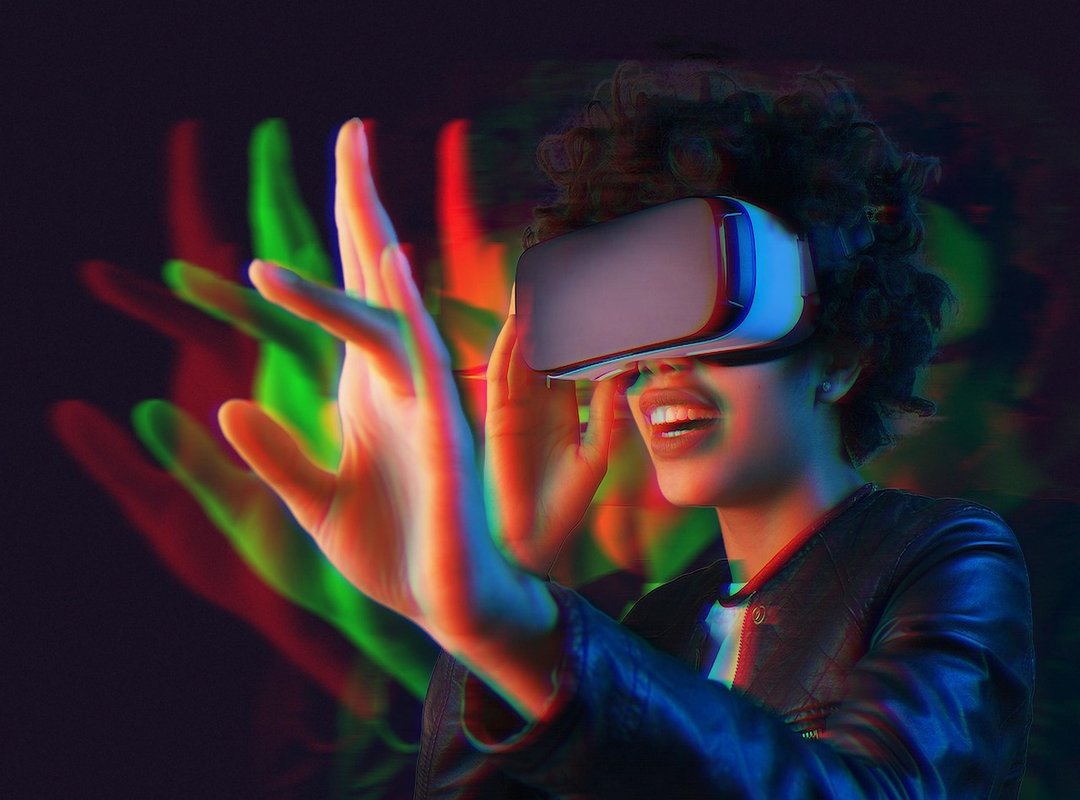
Technology is moving so fast it feels like we can barely keep up.
All this jargon surrounding immersive experiences? It’s overwhelming.
I’m here to demystify enhanced reality software solutions and cut through the noise.
You’ll learn what they really are, how they function, and why they matter.
From my vantage point, I see key trends shaping the tech space today.
Understanding these patterns is key for anyone looking to use augmented reality applications in meaningful ways.
This article aims to provide you with practical takeaways and a solid foundation in enhanced reality.
I want you to walk away feeling empowered, ready to explore this big technology without getting lost in the buzzwords.
We’ve consulted experts to make sure you get reliable information.
So let’s dive in and open up the potential of these solutions together.
Trust me, you’ll want to stay ahead of the curve in this game.
Enhanced Reality: Beyond the Screen
Enhanced Reality. Sounds fancy, right? At its core, it’s a blend of digital and physical worlds.
Now, let’s talk software solutions. You might think it’s all about the hardware, but that’s just the tip of the iceberg. The magic happens behind the scenes with engines, SDKs, and APIs.
We’re talking about tech that overlays digital information onto our real environment. Unlike traditional Virtual Reality, which drowns you in a fully digital space, Enhanced Reality lets you stay grounded. It’s like having one foot in each world.
These are the unsung heroes that allow digital objects to interact convincingly with the real world.
Ever used a Snapchat filter? That’s augmented reality applications in action. Enhanced Reality uses computer vision, spatial mapping, and rendering engines to make it all happen.
It’s not just about seeing digital objects. It’s about interacting with them. You know what this reminds me of?
The Expect Blockchain 2024 predictions. Different tech, same innovation vibe.
Pro tip: Want to dive into this world? Start with platforms like ARKit or ARCore. They’re your gateways to creating mind-bending experiences.
So, are you ready to step into the future?
The Spectrum of Enhanced Reality: Key Technologies
Augmented Reality (AR) is like magic. It overlays digital content onto the real world using smartphones or smart glasses. Think Pokémon GO.
The tech behind this? AR SDKs like ARKit and ARCore. They’re solid tools that make digital overlays possible.
Mixed Reality (MR) takes it up a notch. It blends digital objects with the physical environment, allowing real-time interaction. Imagine virtual furniture in your living room that you can walk around and even sit on.
Spatial anchors and holographic interaction make this happen.
Now, let’s talk about Extended Reality (XR). It’s the umbrella term for VR, AR, and MR. XR defines the immersive tech world.
It’s becoming the linchpin of augmented reality applications.
Behind these experiences are foundational software technologies. Object recognition, real-time rendering, gesture tracking, and voice command integration power them. They cater to varying levels of immersion.
Simple overlays to fully interactive digital twins in physical spaces? That’s the range.
Different software approaches offer different experiences. Some are basic, others complex. It’s important to choose the right tool for the job.
Whether you want a simple overlay or something that feels like a scene from Blade Runner, there’s a solution.
In this fast-paced tech world, understanding these technologies is key. How else will you stay ahead?
Revolutionizing Industries: Real-World Applications of ER
Let’s be real, augmented reality applications are changing the game. In manufacturing, using ER software for design visualization isn’t just a fancy add-on; it’s a necessity. Remote assistance for technicians?
It’s like having an expert by your side, minus the travel costs. Then there’s hands-on training simulations. You don’t just learn by reading; you experience it.
In healthcare, the stakes are high. Surgical planning with ER isn’t science fiction. It’s happening now.
And don’t get me started on virtual anatomy in medical education. It’s like giving med students x-ray vision (without the radioactive side effects). Remote diagnostics?
It’s a lifeline, literally.
Retail and e-commerce have jumped on board too. Virtual try-ons are more than just fun filters; they make shopping personal. Interactive catalogs and augmented shopping environments engage customers in a way static images never could.
If you’re curious about more, check out 12 examples of augmented reality in different industries.
Education and training are no exception. From historical reconstructions to scientific experiments, ER creates immersive learning like nothing else. It’s not just about lectures; it’s about living history.
Field service applications are on another level. Using ER for guided repairs and inventory management isn’t just fast; it’s smart. Optimized route planning with contextual data saves time and headaches.
Mistakes? Sure, I’ve made plenty. Assuming ER was just a gimmick?
Big mistake. But the lesson? It’s a tool with real-world, tangible benefits.
Augmented Reality: Transforming Business Operations
I’ve seen firsthand how augmented reality applications can turbocharge a business. They don’t just boost operational efficiency; they redefine it. Guided workflows trim down errors and slash training cycles.
It’s like switching from a tricycle to a race car. You feel that speed.
But it’s not just about speed. User engagement skyrockets. Imagine customers being able to interact with product views or employees diving into immersive training.
It’s not sci-fi anymore. It’s here. And it’s solid.
Data visualization gets a facelift too. Real-time information in your workspace? Yes, please.
It fosters innovation and gives you that edge over competitors who are still stuck in the past.
On the flip side, integrating this tech isn’t a walk in the park. You have to make sure hardware compatibility. Your software should sync smoothly with devices like headsets or smartphones.
Scalability is another puzzle piece. Plan for growth. Technology evolves, and you don’t want to be left in the dust.
Smooth integration with systems like ERP or CRM is key. Without it, you’re just throwing money at a screen. An intuitive User Experience design is key for adoption.
You don’t want frustrated users, right?
Security can’t be ignored either. Protecting data in these immersive environments is non-negotiable. By the way, if you’re curious about the broader digital impact, check out this impact of metaverse social media.
It’s all connected.
The Road Ahead: Enhanced Reality Challenges
Let’s get straight to it. Developing augmented reality applications is no cakewalk. It demands specialized skills and a hefty wallet just to get started.
The cost of advanced hardware and software licensing can make your head spin. And that’s before you even consider the user adoption hurdles. Comfort and acceptance?
They’re big deals. Plus, folks need to climb the learning curve for new interfaces.
But wait, there’s more. Ethical issues can’t be ignored. Data privacy, potential distractions, and responsible content creation are buzzing in the background.
Looking forward, AI’s role in ER is undeniable. It’s going to make experiences smarter and more adaptive. Cloud-based ER might just save us all, offloading processing power for wider access.
WebAR is on the rise too, making augmented experiences just a browser click away. And if haptic feedback or advanced sensors don’t excite you, what will? Natural interaction methods are the future.
Who wouldn’t want that?
Your Next Step in Enhanced Reality
I want to stress that enhanced reality software solutions are real tools changing industries now. You might feel overwhelmed by the complexity of this field, but don’t let that stop you. With a firm grasp of the ‘what,’ ‘how,’ and ‘why,’ you’re ready to dive in.
Look for potential applications in your work. Consider starting a pilot project to see the benefits firsthand. Stay updated on the latest advancements.
Don’t wait. Explore augmented reality applications now and transform your approach. Your future in this tech is waiting.
 Lirithyn Dusklance